Why Smart Agencies Are Ditching SaaS Subscriptions and Building Their Own Software in 2026
Something interesting happened in 2026. According to Retool's annual Build vs. Buy report, 35% of enterprise teams have already replaced at least one SaaS product with custom-built software. Another 78% say they plan to build more custom tools in the next two years. The trend isn't limited to tech companies — agencies are some of the fastest adopters, and the reasons are entirely practical.
The SaaS Tax: What Your Agency Actually Pays
Most agencies don't know what they actually spend on software. The visible number — the sum of your monthly subscription invoices — is usually somewhere between £800 and £2,500 per month for a 10-person team. That covers your project management tool, CRM, file storage, communication platform, reporting tools, social media scheduler, email marketing, and the handful of utility subscriptions that seemed essential at the time.
But the headline price is rarely the real price. Research shows that the true total cost of ownership for SaaS tools runs 2.5 to 4 times the subscription fee when you factor in implementation, training, integration maintenance, and the productivity lost to switching between disconnected platforms. That £1,500/month SaaS stack is actually costing your agency £3,750-6,000/month in real economic impact. Over three years, that's £135,000-216,000 — and you own nothing.
The Agency Tool Sprawl Problem
The average business now uses over 100 SaaS applications. Agencies are particularly vulnerable to tool sprawl because every new client engagement, service offering, or team member creates pressure to add another subscription. And unlike most businesses, agencies deal with creative workflows that don't fit neatly into generic software categories — a task that's part project management, part creative review, part client communication, and part reporting needs four different tools to manage in a traditional SaaS setup.
The real damage isn't the subscription cost. It's the data silos. When your project briefs live in Notion, your tasks in Asana, your files in Google Drive, your communications in Slack, and your reporting in Google Sheets, no one has a complete picture of anything. Context gets lost between tools. Updates happen in one place but not another. Your senior team spends more time managing the connections between tools than doing the work the tools were supposed to enable.
35% of Teams Have Already Replaced SaaS — Here's What They Did
The organisations leading this shift aren't building custom software because they enjoy the complexity. They're doing it because the maths stopped making sense. Companies that replaced SaaS with custom tools report 30-50% reductions in software spend, faster workflows because everything is connected, and elimination of the 'integration tax' — the ongoing cost of keeping disconnected tools synchronised.
The pattern is consistent: teams identify the 3-5 tools creating the most friction, build a custom system that replaces all of them with one unified platform, and then wonder why they waited so long. The custom solution doesn't need to be better than each individual SaaS tool at that tool's specialty. It just needs to work as a single connected system — which is something no combination of SaaS tools can actually achieve.
Custom Software vs. SaaS: The Real Comparison for Agencies
The traditional argument against custom software has three pillars: it costs too much, it takes too long to build, and it's hard to maintain. In 2026, all three of those arguments have collapsed for agencies. Cost: a custom Agency OS costs £3,500-5,000 to build — less than three months of the average agency's SaaS stack. Speed: a properly scoped agency platform can be built in 14 days, not the 6-12 months that custom software used to require. Maintenance: modern platforms are built on infrastructure that handles updates, security patches, and scaling automatically.
The comparison that matters isn't 'custom vs. SaaS' in the abstract. It's 'one platform built for your workflow vs. eight platforms built for everyone's workflow.' When you frame it that way, the answer is obvious — especially when the one platform costs less than the eight and you own it forever.
What a Custom Agency OS Actually Looks Like
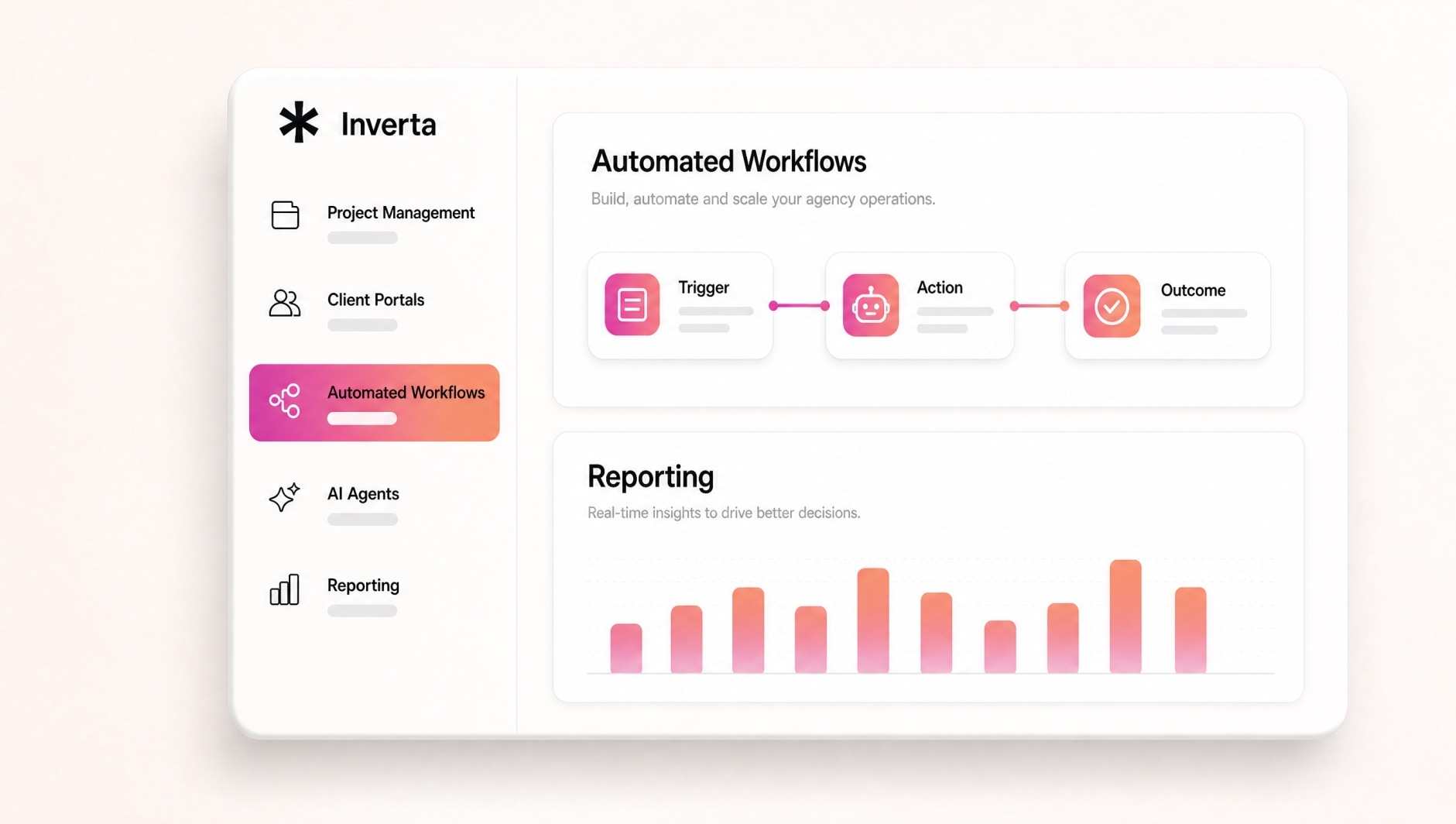
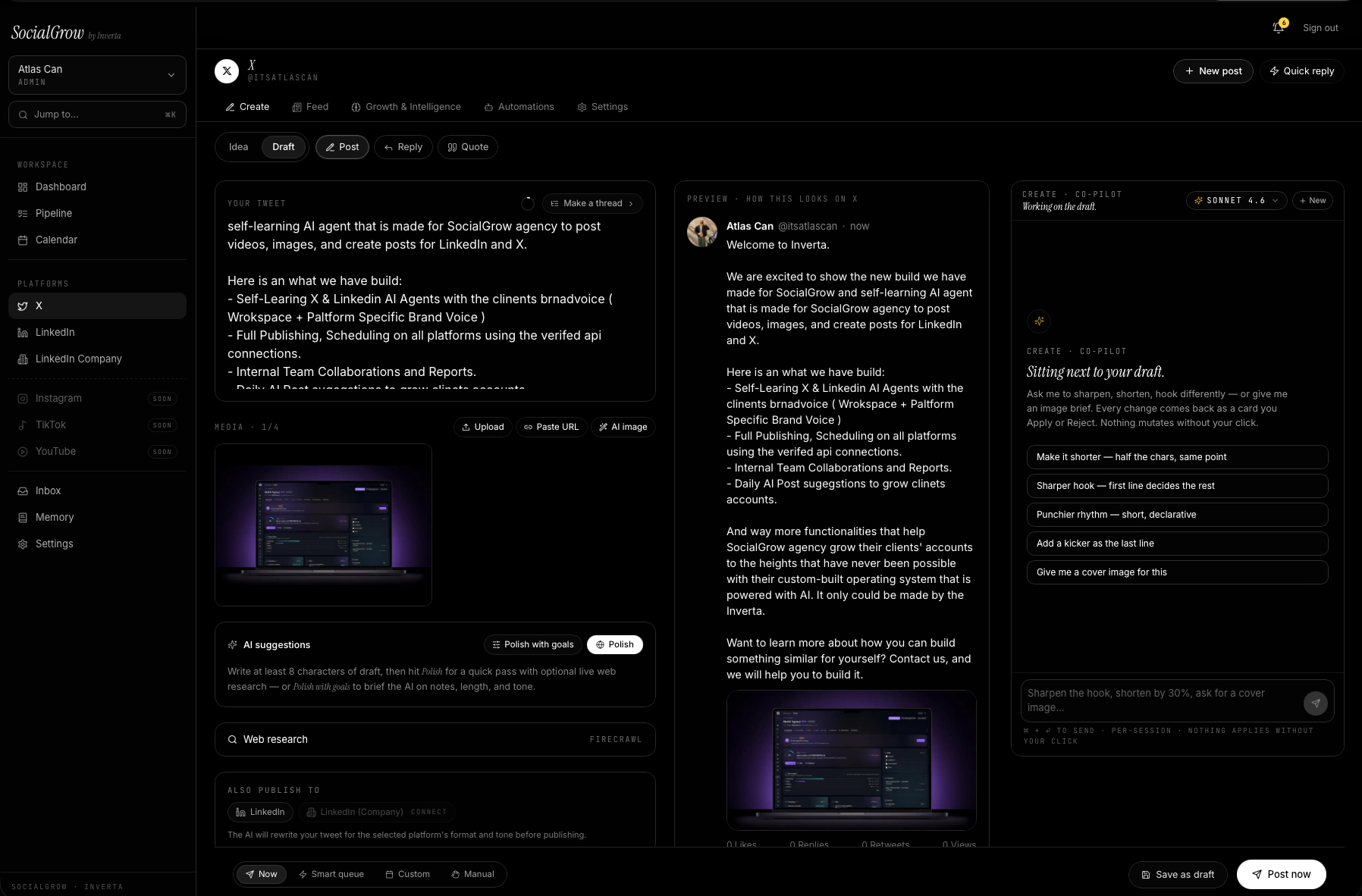
A custom Agency OS isn't a stripped-down version of existing tools cobbled together. It's a single system designed around how your agency actually operates. Client onboarding is automated — a form submission triggers the creation of every workspace, folder, template, and communication channel that client needs. Project management uses your terminology and your workflow stages, not someone else's generic template. Reporting pulls data from every part of the system and generates client-ready reports automatically. AI handles content drafting, repurposing, and routine communications using each client's specific brand voice.
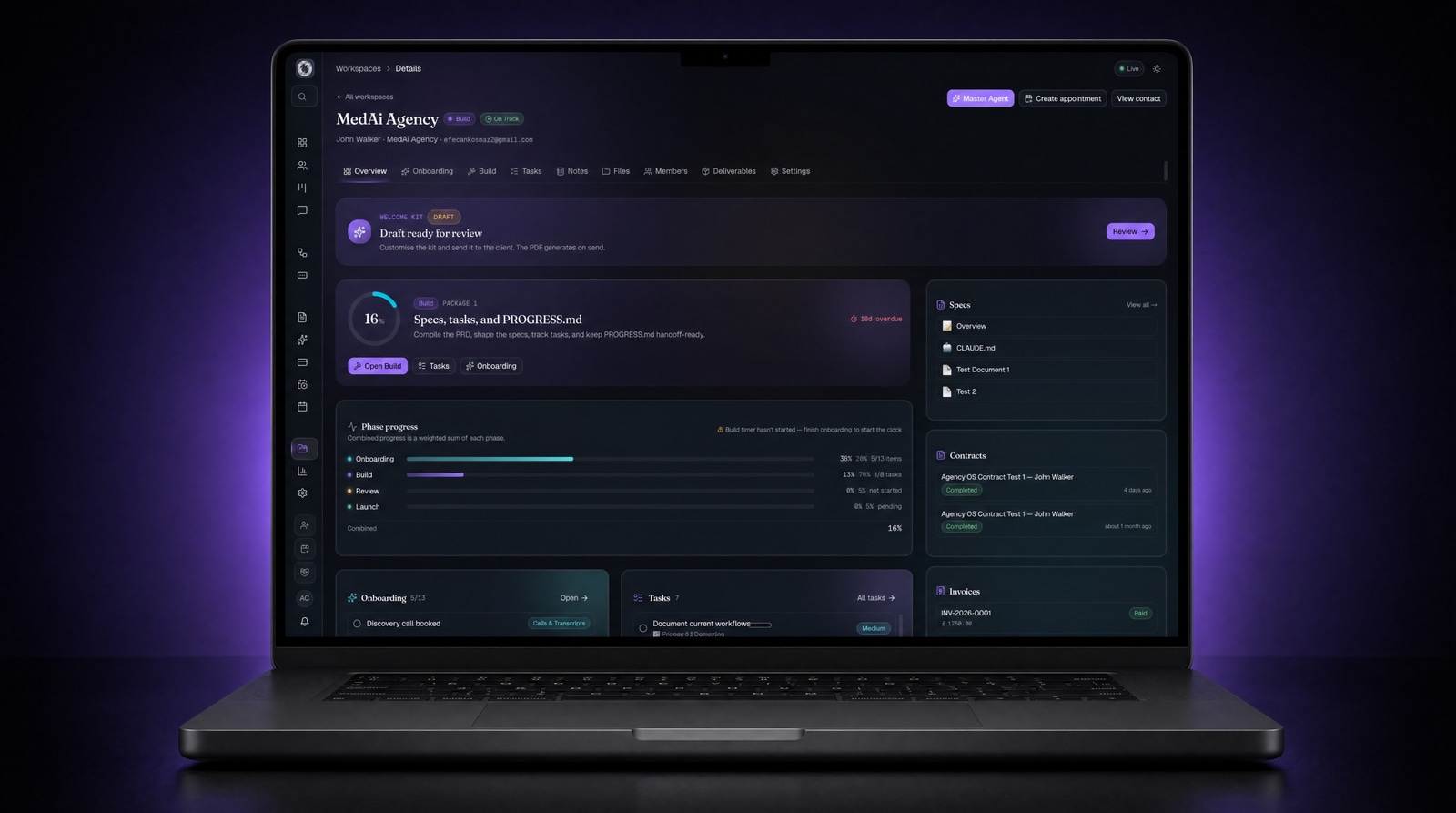
The difference shows up on day one. Instead of spending 30 minutes every morning checking six different tools for updates, your team opens one platform and sees everything — every project status, every pending approval, every client communication, every deadline — in one view built specifically for their role.
The Maths: SaaS Stack vs. Custom Agency OS Over Three Years
For a 10-person agency, the typical SaaS stack costs £1,200-2,000/month in subscriptions alone. Add the hidden costs — integration maintenance, productivity loss, context-switching, manual data transfer — and the real monthly cost is £3,000-5,000. Over three years: £108,000-180,000. At the end of those three years, you own nothing. Cancel any subscription and that piece of your operation disappears.
A custom Agency OS has a one-time build cost of £3,500-5,000. Monthly running costs — hosting and AI usage — typically run £100-250/month. Three-year total: £7,100-14,000. You own the software outright. No per-seat charges. No usage limits. No vendor deciding to increase prices by 40% because they know switching costs are high enough that you'll pay.
But What About Updates and Maintenance?
This is the most common objection, and it's a fair one. SaaS products get regular updates. Custom software needs someone to maintain it. The reality in 2026 is more nuanced. SaaS updates often introduce features you don't need and occasionally break workflows you depend on — anyone who's been through a major Notion or Asana redesign knows the pain. Custom software gets updated when you want it updated, with changes that are relevant to your workflow.
Modern custom platforms are built on cloud infrastructure that handles security patches, server updates, and scaling automatically. The application layer — your actual business logic and workflows — only needs updating when your business changes. And when it does need updating, the changes can be made in days, not months, because the system was designed for your specific needs rather than millions of generic users.
Is Custom Software Right for Your Agency?
Custom software makes the most sense when your agency has outgrown the 'one tool for each function' approach — typically around 5-10 team members. If you're spending more than £800/month on software subscriptions, if your team complains about switching between too many tools, if client onboarding takes longer than it should, or if your senior people spend hours on manual reporting that should be automated, you're a strong candidate.
The agencies that make this switch aren't doing it because custom software is trendy. They're doing it because running a growing business on rented, disconnected tools stopped making sense — financially, operationally, and strategically. And with build times measured in weeks rather than months and costs measured in thousands rather than tens of thousands, the barrier to making the switch has essentially disappeared.